

Mushrooms are the visible fruit of a much larger living network called mycelium, which grows quietly beneath the surface—much like roots in a garden. Just as a plant uses soil to grow and produce flowers, mushrooms grow from this hidden network and emerge when conditions are right.
What is a Mushroom?
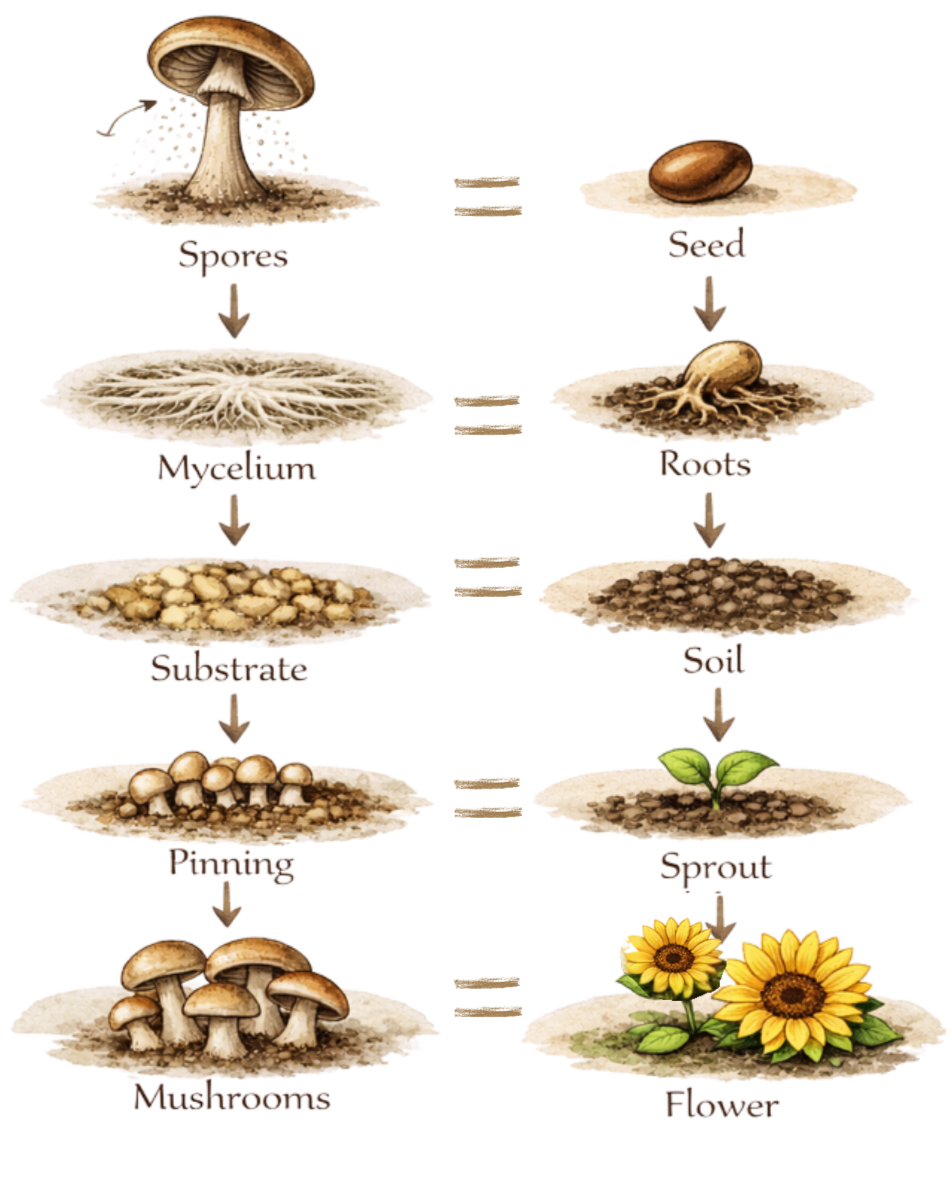
We grow mushrooms by carefully guiding their natural process—starting with a pure culture (similar to seeds), expanding it through mycelium (equivalent to roots), and providing a nutrient- rich growing medium (called substrate), much like planting a seed in soil. With the right balance of temperature, humidity, and fresh air, the mushrooms emerge and develop just as plants and flowers do in a well-tended garden.
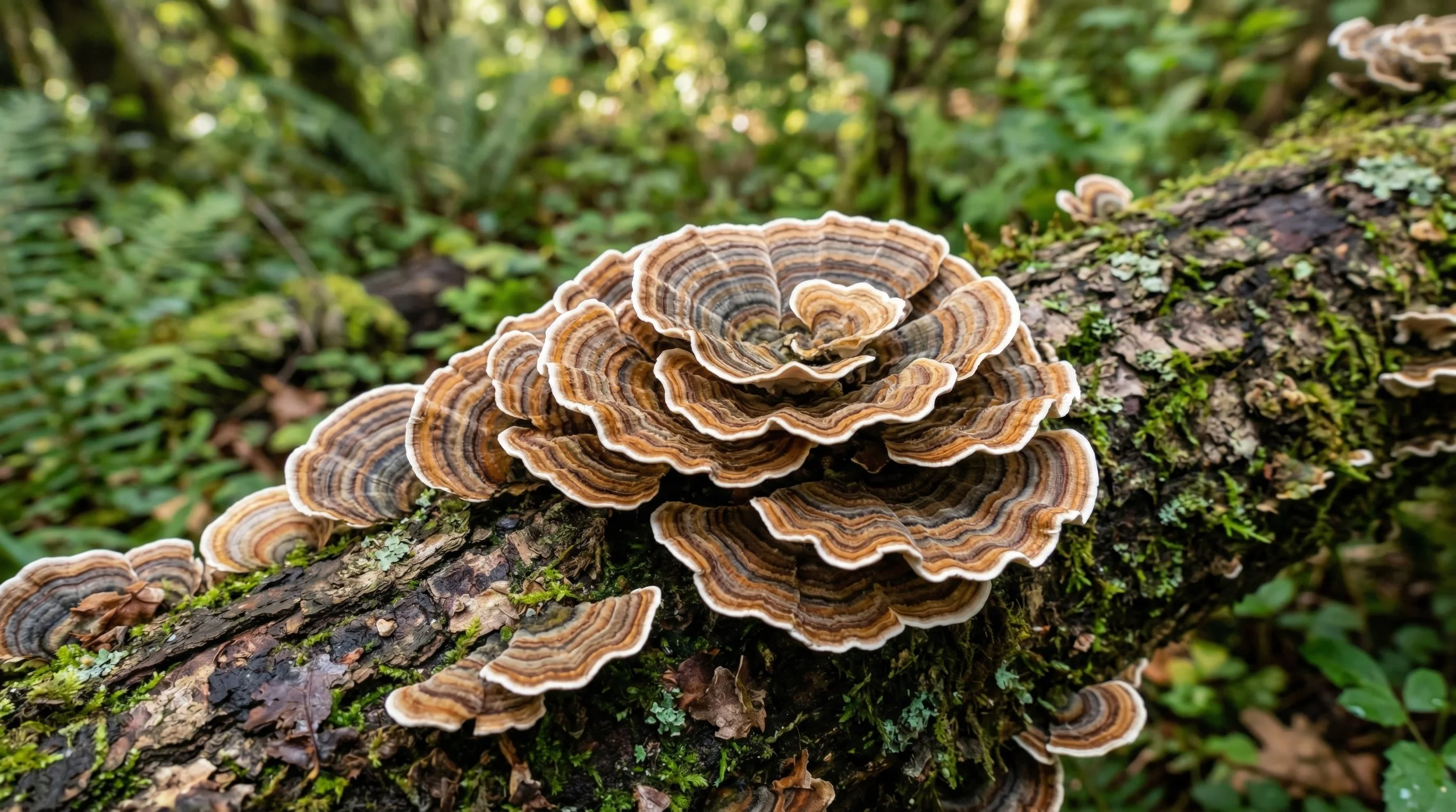
Mushroom Terminology Cheat Sheet
-
The main body of the fungus—a network of fine, thread-like strands that grow beneath the surface, similar to roots in a plant.
-
Tiny, dust-like particles released by mushrooms that allow them to reproduce—like seeds, but much smaller.
-
The natural material mushrooms grow on, such as wood or straw. It provides the nutrients they need, similar to soil for plants.
-
A small, clean sample of living mushroom tissue or cells that we use to start the growing process—similar to using a starter in baking or a cutting from a plant to grow a new one.
-
Grains (like rye or millet) that have been colonized by mycelium and are used to “plant” mushrooms into their growing medium.
-
The stage when tiny baby mushrooms first begin to form—these are the early signs of growth before full mushrooms develop.
-
The stage when mushrooms grow to full size and are ready to harvest.
Wild vs. Cultivated Mushrooms
Wild Mushrooms (Mycorrhizal)
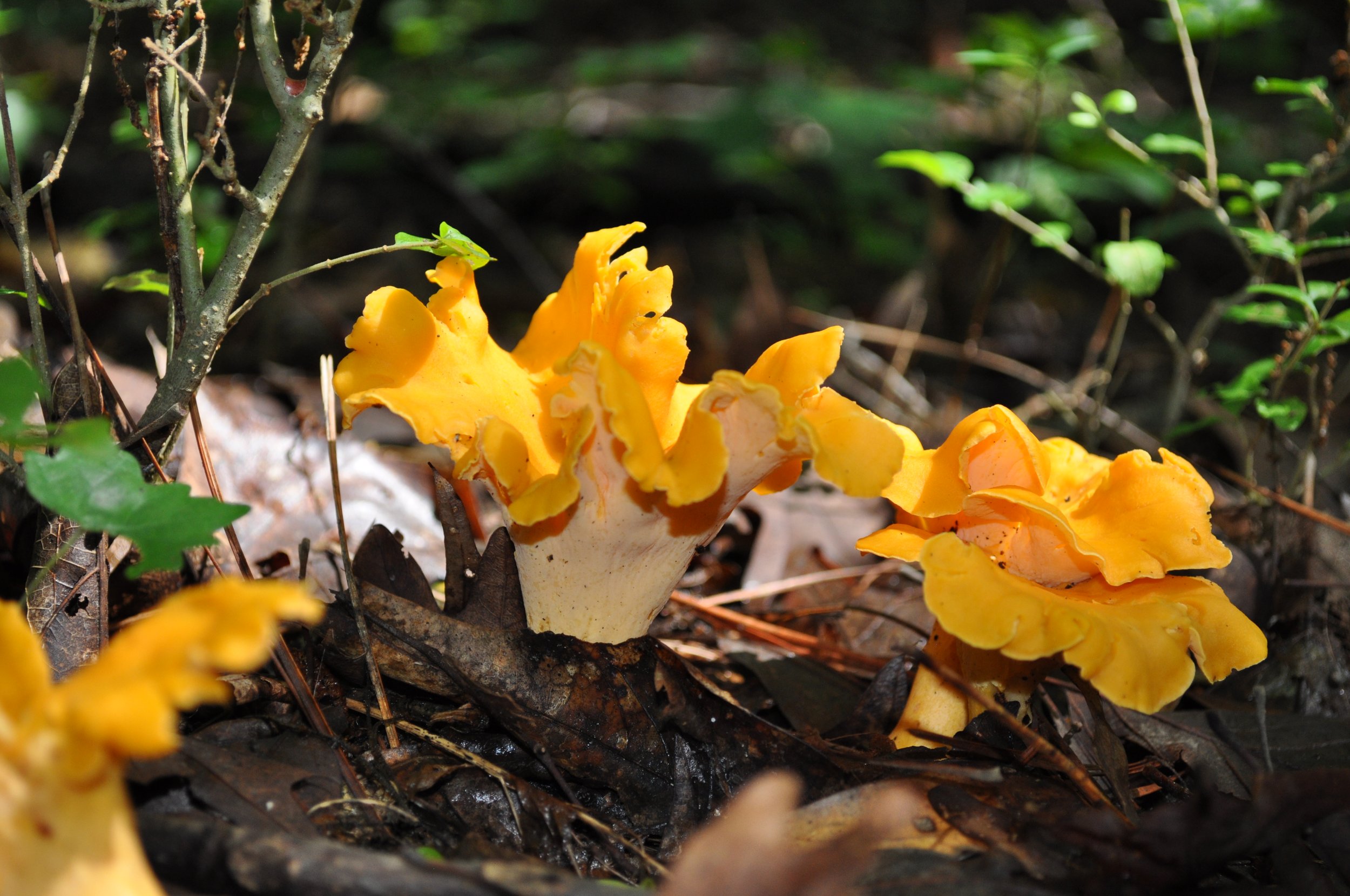
Some of the most prized mushrooms—like truffles, chanterelles, morels, porcini, and matsutake—are part of a group called mycorrhizal fungi. These mushrooms grow in close partnership with the roots of living trees, exchanging nutrients in a delicate, natural balance.
Because they depend on these complex relationships and very specific environmental conditions, they can’t be reliably cultivated. They are typically found only in the wild, often after years of growth in a healthy forest ecosystem. Today, many researchers are attempting to develop ways that these mushrooms can be cultivated as well, with mixed results.
Cultivated Mushrooms (Saprophytic)
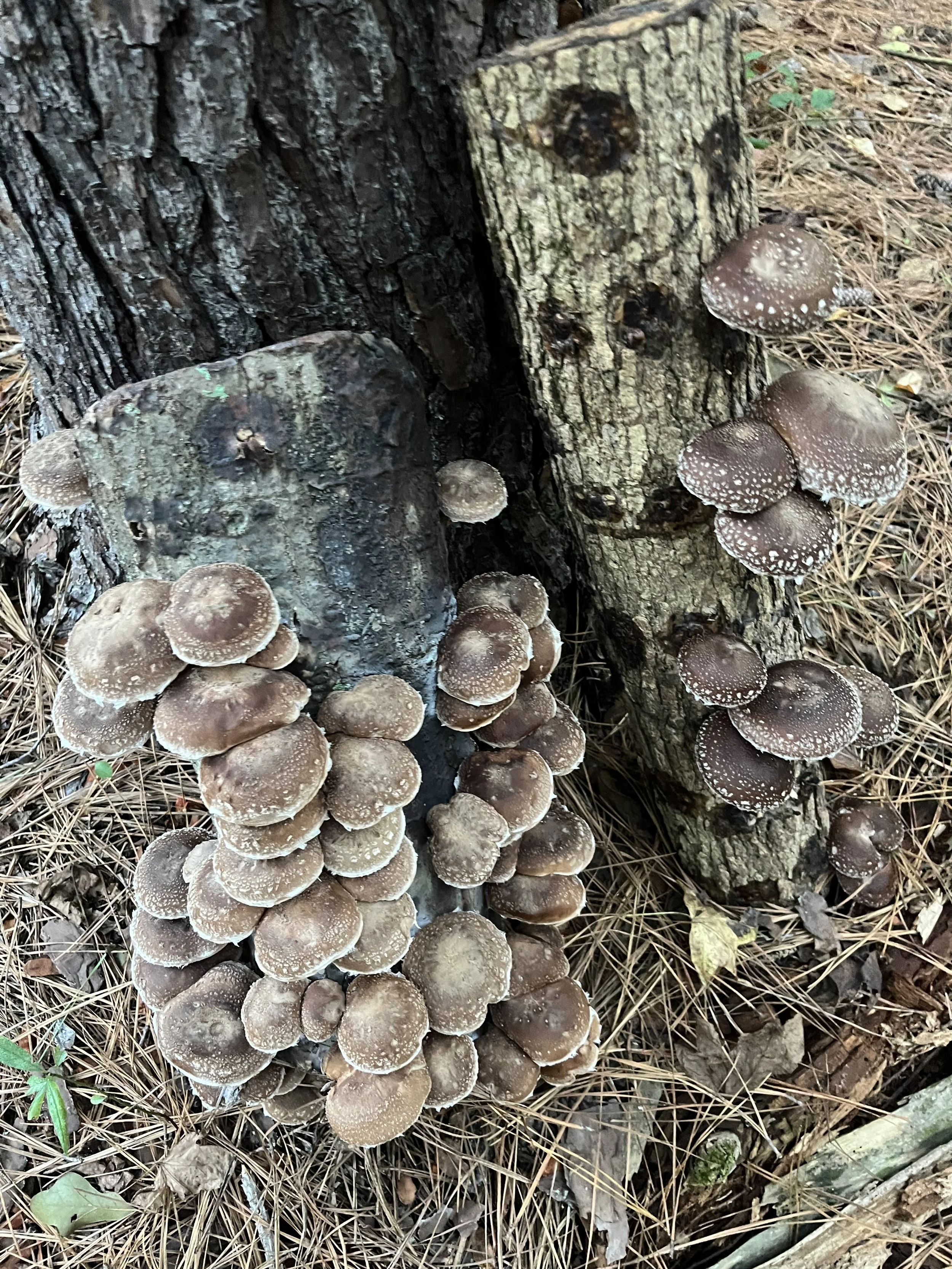
The mushrooms we grow—such as oyster, lion’s mane, chestnut, and shiitake—belong to a group called saprophytic fungi. Instead of relying on living trees, they grow by breaking down natural materials like wood and plant matter. This allows us to cultivate them in carefully controlled conditions, producing fresh, high-quality mushrooms year-round while still working in harmony with their natural life cycle.